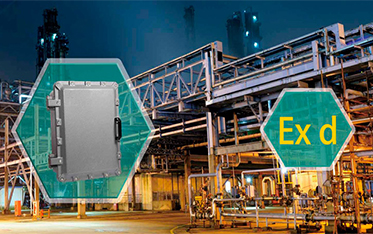
What Are Explosion-proof Junction Boxes?
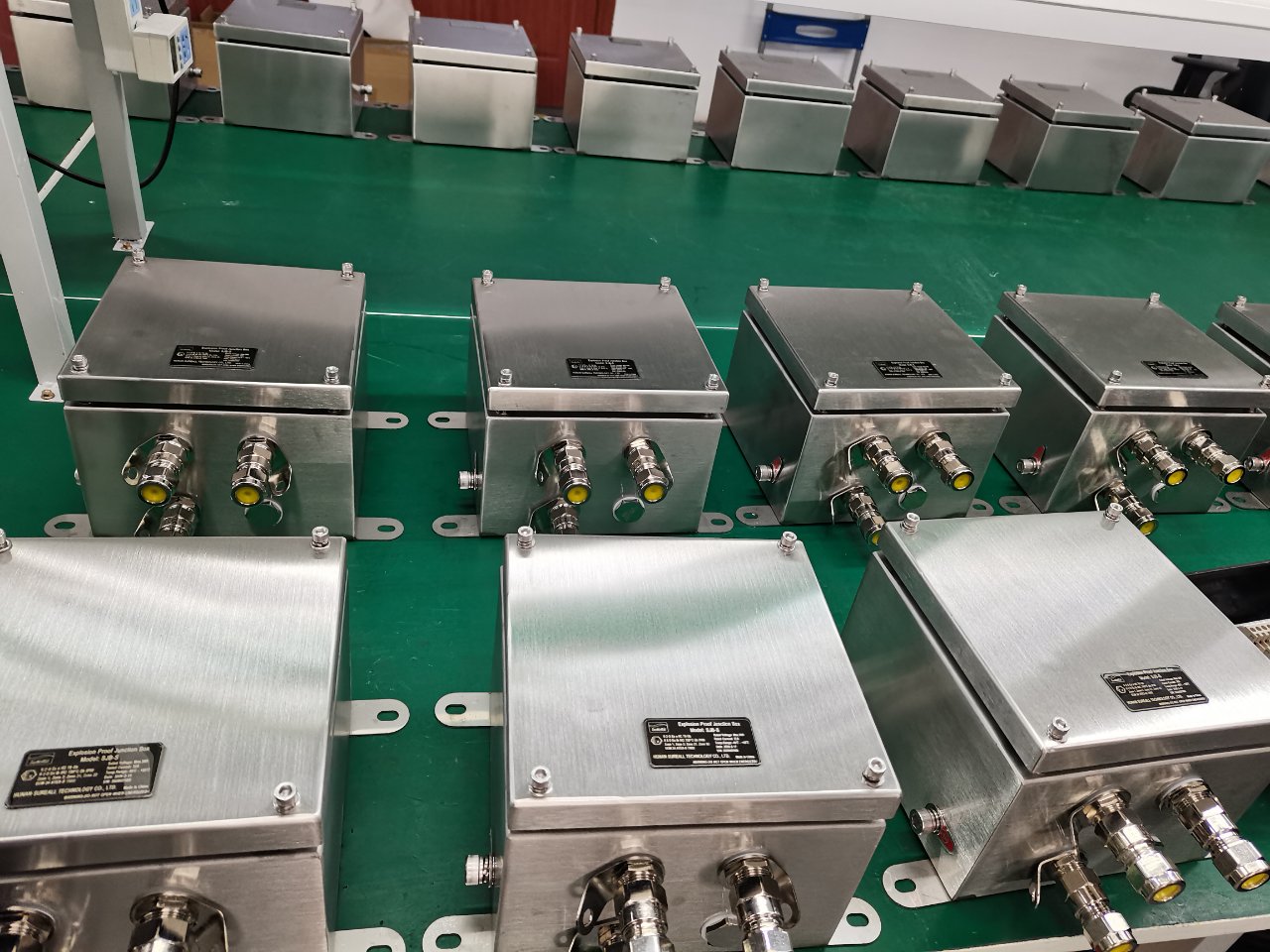
An explosion-proof junction box is a specially designed electrical product used in hazardous areas where flammable or explosive substances may be present. These hazardous materials include gases, vapors, dust, and fibers.
Compared with ordinary junction boxes used in daily environments, explosion-proof junction boxes not only perform the basic function of electrical circuit connection but must also have sufficient mechanical strength to withstand potential explosions and the corrosive effects of hazardous substances. In addition, they are specially designed to prevent the propagation of explosions, thereby protecting personnel and surrounding equipment.
Hazardous Area Classification
To determine the appropriate type of explosion-proof junction box for a specific environment, hazardous area classification is used to identify different types of flammable and explosive atmospheres.
Two classification systems are widely used worldwide: one defined by the International Electrotechnical Commission(IEC) and another by the National Electrical Code(NEC) in the United States.
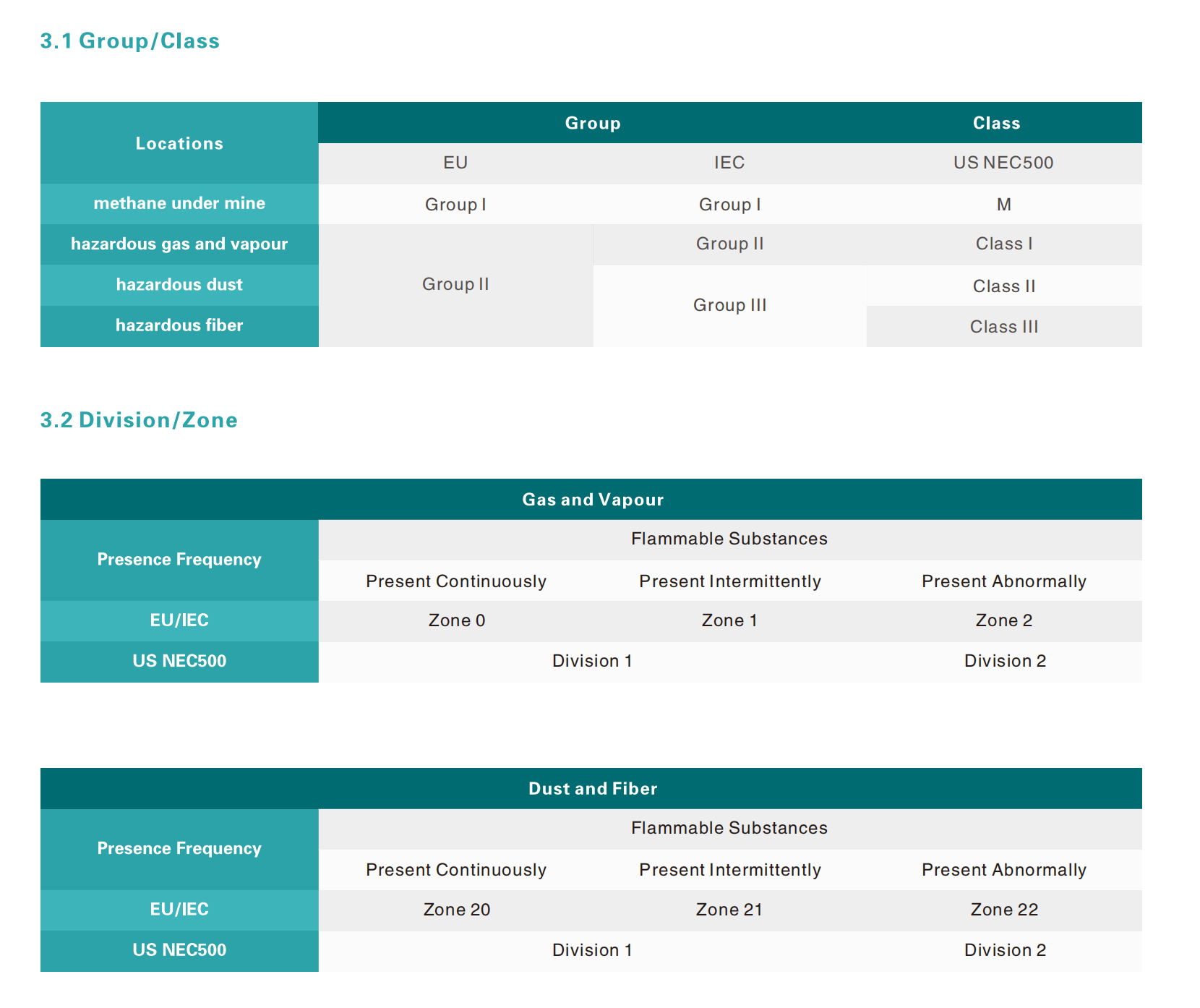
Hazardous Area Classification Under Different Standards
IEC System
Zone 0 (for gas) / Zone 20 (for dust) area means ignitable concentrations of hazardous substances are present continuously, for long periods, or frequently during normal operation, typically more than 1,000 hours per year.
In these areas, explosive atmospheres consisting of flammable gases, vapors, mists, or combustible dust may exist almost all the time.
Zone 1 (for gas) / Zone 21 (for dust) area means ignitable concentrations of hazardous substances are likely to occur during normal operating conditions, typically between 10 hours and 1,000 hours per year.
Explosive atmospheres composed of flammable gases, vapors, mists, or combustible dust may occasionally be present during normal operations.
Zone 2 (for gas) / Zone 22 (for dust) area means ignitable concentrations of hazardous substances are not likely to occur during normal operation, and if they do occur, they exist only for a short time, typically less than 10 hours per year.
These areas have the lowest probability of explosive atmospheres among hazardous zones.
NEC System
Class I / Class II Division 1
In Class I locations, the hazardous materials are flammable gases or vapors, while in Class II locations the hazards come from combustible dust.
Class I / Class II Division 1 areas are locations where hazardous substances may be present in the air in quantities sufficient to produce explosive or ignitable mixtures under normal operating conditions, typically more than 10 hours per year.
These atmospheres may occur continuously, intermittently, or periodically during normal operations.
Class I / Class II Division 2
Class I / Class II Division 2 areas are locations where hazardous substances are not normally present in explosive concentrations during normal operation, and if they do occur, they exist only for a short period, typically less than 10 hours per year.
Such hazardous atmospheres usually arise from abnormal conditions such as equipment failure, accidental rupture, or leakage. Under normal circumstances, the hazardous materials are contained within closed systems or equipment.
Explosion-proof Certifications
To ensure that explosion-proof junction boxes meet the relevant standards required by IEC and NEC, manufacturers can obtain explosion-proof certifications issued by recognized third-party testing laboratories.
Common and widely recognized explosion-proof certifications include ATEX certification, IECEx certification, and UL certification.
These certifications verify that the equipment can be safely used in hazardous environments.
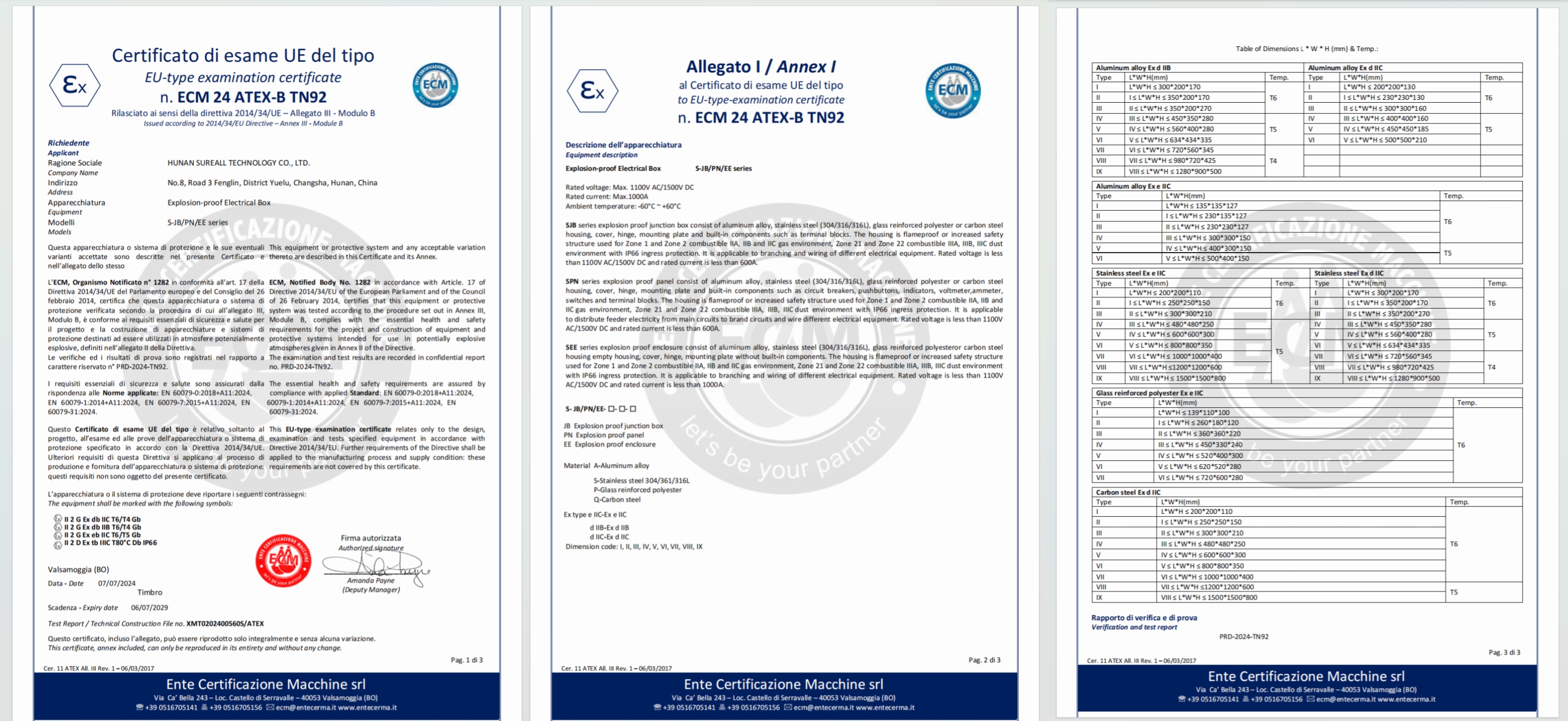
Types of Explosion Protection
Because hazardous substances and risk levels vary across different areas, explosion-proof junction boxes are designed with different types of explosion protection. The most common types include the following.
Ex d Flameproof Junction Box
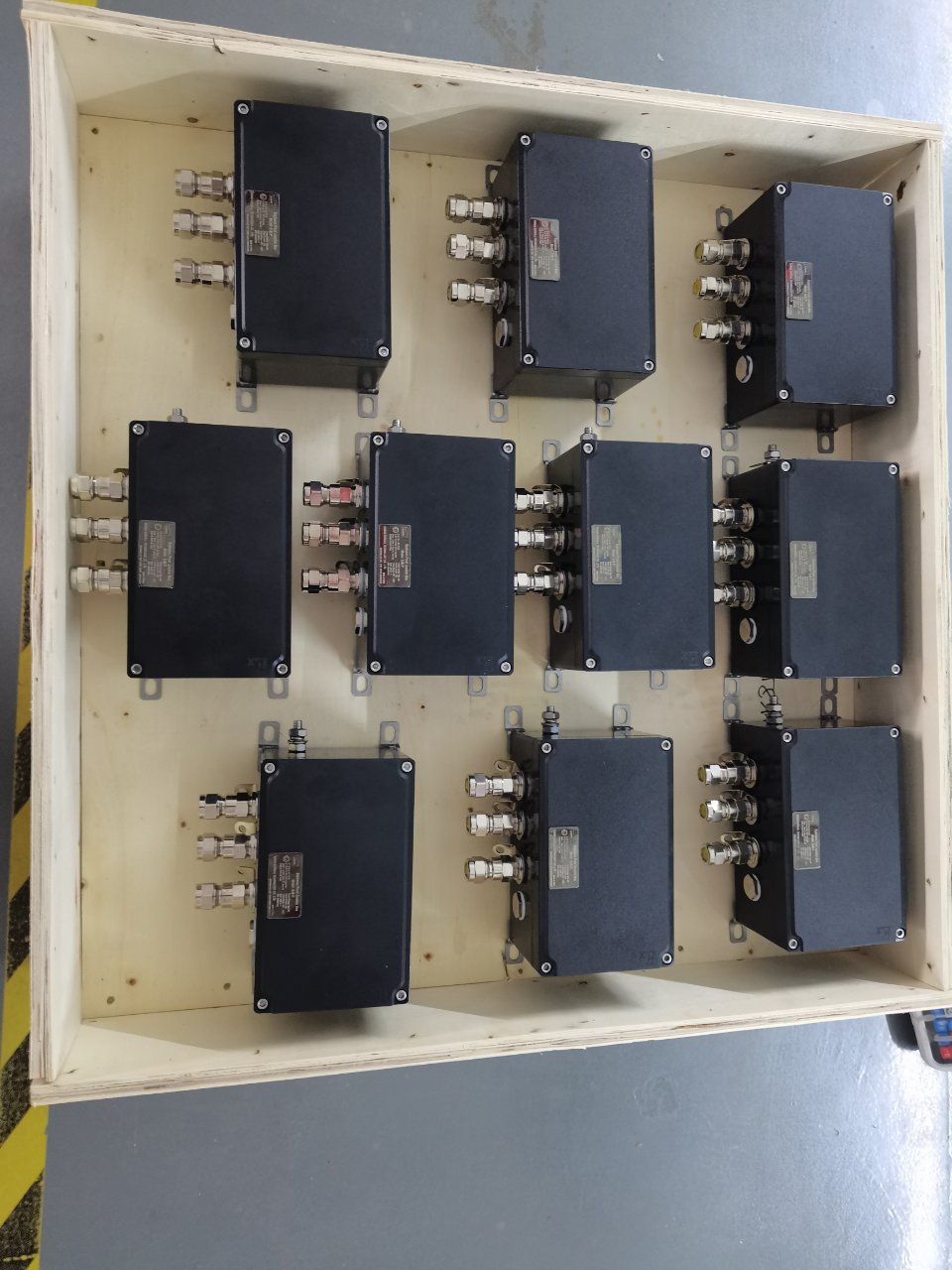
Flameproof protection means that when sparks or explosions occur inside the enclosure due to electrical faults, the enclosure can withstand the internal explosion pressure. The specially designed flameproof joints cool and contain the hot gases, preventing flames from propagating to the surrounding atmosphere and triggering a larger explosion.
This type of junction box typically uses a thick-walled metal enclosure with high mechanical strength and is commonly used in higher-risk areas such as Zone 1.
Main Structure of an Ex d Enclosure
Explosion-proof junction boxes are used to collect, connect, and distribute electrical circuits from different systems. Their basic structure generally includes the following components.
Enclosure
Flameproof enclosures are typically manufactured from high-strength metal materials, most commonly aluminum alloy or stainless steel (such as 304 or 316).
The enclosure walls are relatively thick so that they can withstand the internal pressure generated during an explosion while maintaining the overall structural strength and safety of the equipment.
Flameproof Joint (Flamepath)
The flameproof joint is one of the most critical parts of an Ex d enclosure and is typically located between the enclosure body and the cover.
Through precision machining, the joint forms a specific gap and length. If an explosion occurs inside the enclosure, the hot gases are cooled as they pass through the flamepath, preventing flames from reaching the external environment.
Common flamepath types include flat joints, cylindrical joints, and stepped joints.
Terminal Blocks
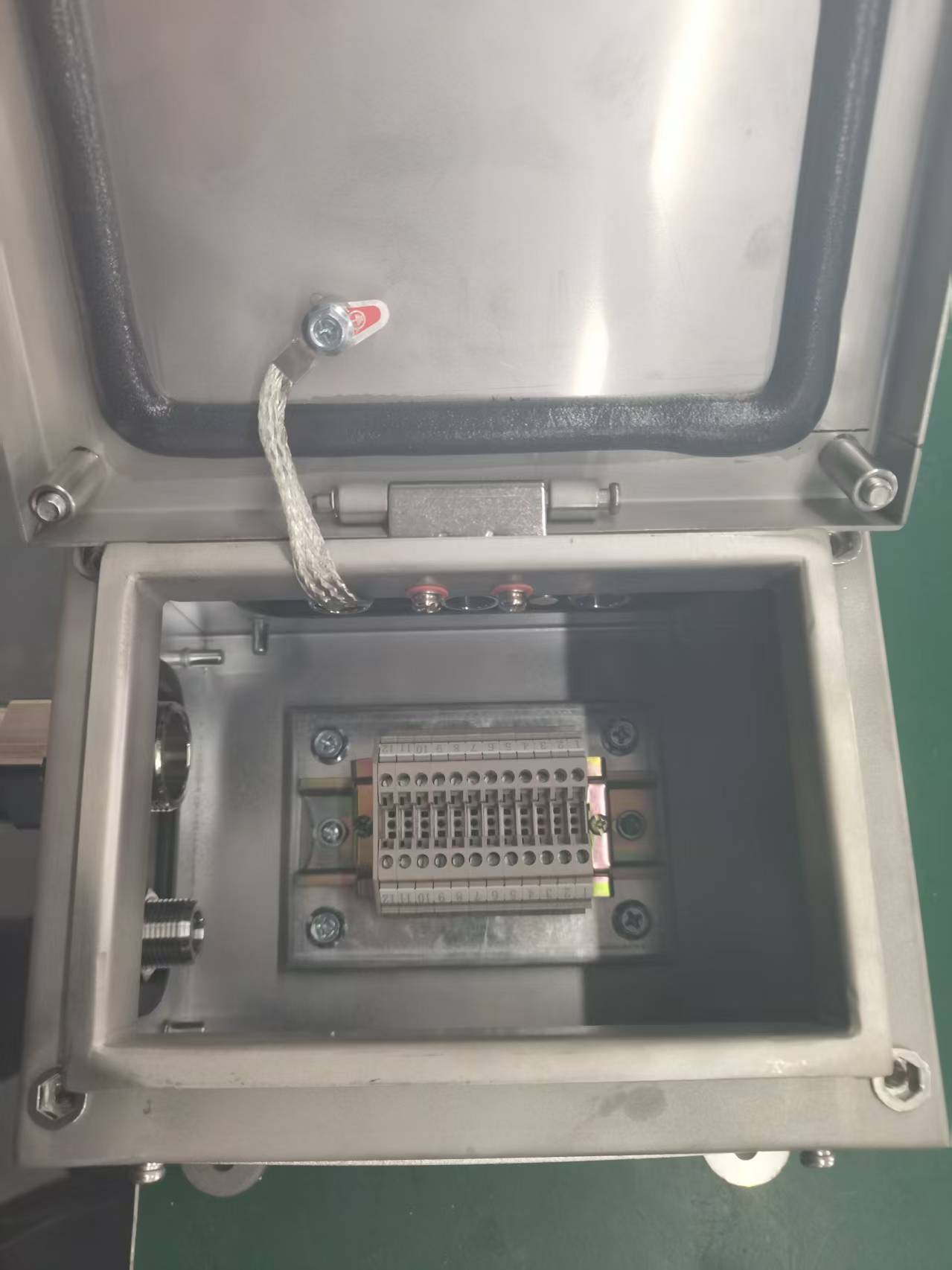
Terminal blocks are used to connect incoming and outgoing circuits to allow electrical current to be transmitted and distributed.
Common terminal brands include Weidmüller. For example, the WDU series is typically used to connect conductors for current transmission, while the WPE series is used as grounding terminals.
Different terminal models support different cable cross-sections, and their allowable current ratings vary accordingly.
Cable Entries and Cable Glands
Depending on the size of the junction box and the specifications of the connected cables, multiple cable entries can be machined on the enclosure.
Cable entries are typically located on the sides of the enclosure and aligned with the internal terminal arrangement. One side is generally used for cable entry and the other for cable exit.
Due to the relatively thick and robust enclosure of Ex d junction boxes, cable entries are usually designed with threaded holes directly machined into the enclosure. Explosion-proof cable glands can therefore be screwed and tightened directly into these threads, ensuring a secure mechanical connection and maintaining the flameproof integrity of the enclosure.
To maintain sealing performance and explosion protection, certified explosion-proof cable glands must be installed at the cable entries to ensure cables or conduits can be safely connected to the enclosure.
If some cable entries are not used, certified explosion-proof stopping plugs must be installed to maintain the explosion protection integrity and ingress protection rating of the enclosure.
Earthing
Ex e junction boxes are typically equipped with both internal grounding terminals and external earthing bolts to ensure reliable grounding. Proper grounding prevents static electricity accumulation and enhances overall safety.
Earthing can be achieved through multiple methods depending on the installation requirements. It can be implemented via the gland plate, which provides a convenient grounding path for cable entries, or through the internal and external earthing studs on the enclosure. These earthing studs allow secure connection to the grounding system, ensuring continuity and compliance with safety standards.
Ex e Increased Safety Junction Box
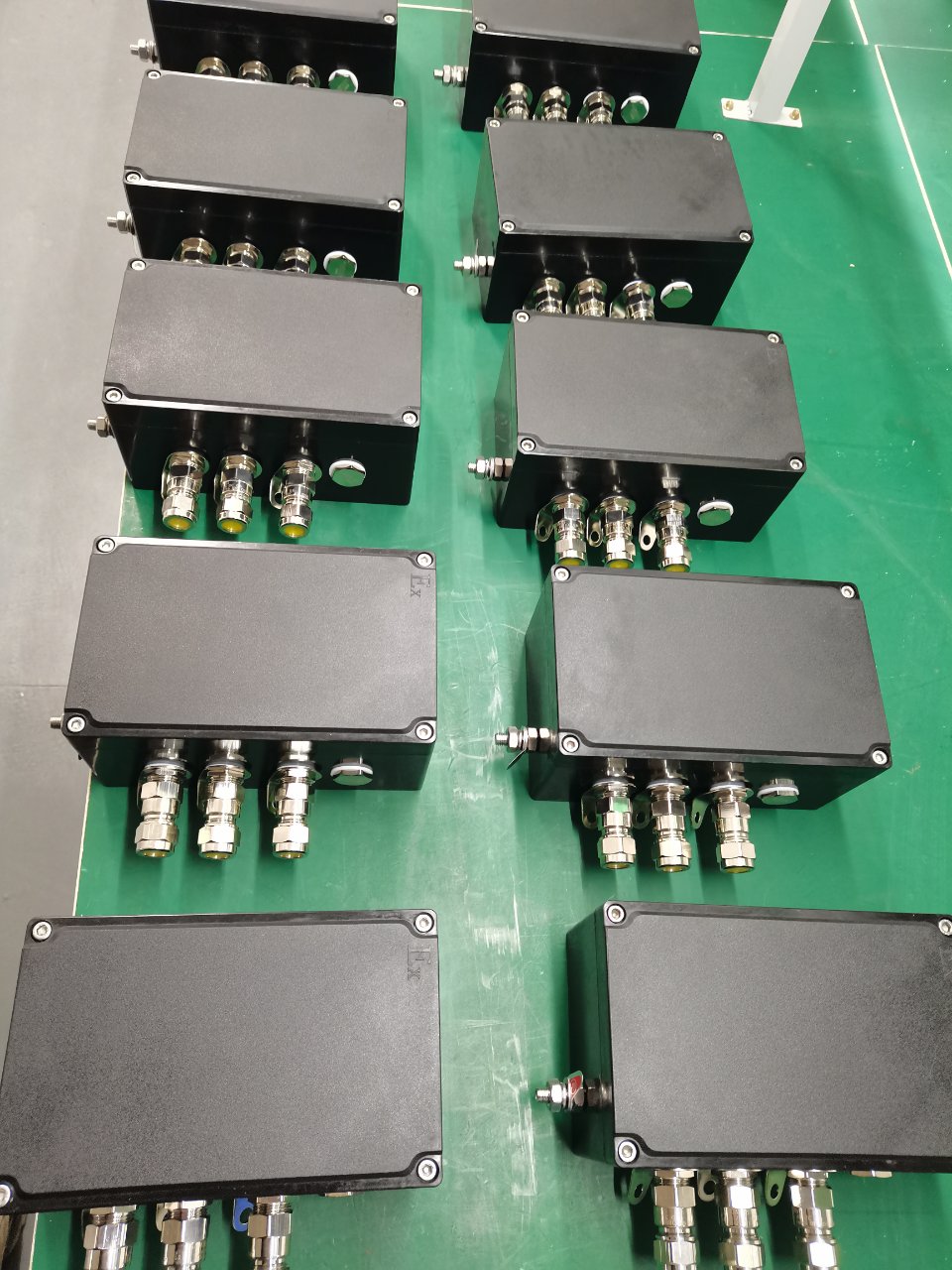
Increased safety protection prevents the ignition of explosive atmospheres by ensuring that electrical equipment does not produce arcs, sparks, or excessive temperatures during normal operation or under specified fault conditions.
Unlike flameproof protection, Ex e equipment does not rely on the enclosure to contain an internal explosion. Instead, it reduces ignition risks by improving insulation performance, increasing creepage distances and clearances, and ensuring reliable electrical connections.
Ex e junction boxes typically have a simpler structure, lighter weight, and easier installation and maintenance. They are widely used in hazardous areas such as Zone 1 or Zone 2 for cable connection and circuit distribution.
Main Structure of an Ex e Enclosure
Enclosure
Ex e junction box enclosures are typically made from metal or engineered plastic materials such as aluminum alloy, stainless steel (304 or 316), or Glass-reinforced plastic(GRP).
Compared with flameproof enclosures, Ex e enclosures do not need to withstand internal explosion pressure, so they are generally lighter while still maintaining sufficient mechanical strength and environmental protection.
Terminal Blocks
Terminal blocks connect incoming and outgoing circuits for current transmission and distribution.
Common brands include Weidmüller, where the WDU series is used for conductor connections and the WPE series is used as grounding terminals.
In increased safety equipment, terminal design and installation must meet stricter requirements for electrical clearances and creepage distances to prevent arcs or leakage currents.
Cable Entries and Cable Glands
Depending on the size of the junction box and the specifications of the connected cables, multiple cable entries can be machined on the enclosure.
Cable entries are typically located on the sides of the enclosure and aligned with the internal terminal arrangement. One side is generally used for cable entry and the other for cable exit.
As Ex e junction boxes typically have thinner enclosure walls, cable entries are not suitable for direct threaded tightening. Instead, cable glands are installed through clearance holes and secured using locknuts (back nuts) from the inside of the enclosure. This method ensures a firm and reliable installation while avoiding damage to the enclosure.
To maintain sealing performance and increased safety protection, certified explosion-proof cable glands must be installed at the cable entries to ensure cables or conduits can be safely connected to the enclosure.
If some cable entries are unused, certified explosion-proof stopping plugs must be installed to maintain the enclosure protection rating and overall safety.
Earthing
Ex e junction boxes are typically equipped with both internal grounding terminals and external earthing bolts to ensure reliable grounding.
Proper grounding prevents static electricity accumulation and enhances overall safety.
Applications of Explosion-proof Junction Boxes
The safety of frontline workers is always the top priority. In environments where hazardous substances may be present, explosion-proof equipment is essential.
Common industries requiring explosion-proof products include:
Oil and Gas
From upstream extraction to downstream refining and processing facilities, oil and gas operations involve highly volatile and flammable substances. Explosion-proof equipment is essential to ensure operational safety.
Chemical and Petrochemical
During chemical and petrochemical production processes, flammable gases and volatile solvents may be released during storage, transfer, or reactions. When mixed with air, they can form explosive atmospheres, making explosion-proof electrical equipment necessary.
Pharmaceutical
Some organic solvents used in pharmaceutical manufacturing are volatile and flammable. In addition, combustible dust may be generated during raw material processing, requiring explosion-proof electrical equipment in relevant areas.
Grain and Food Processing
Dust suspended in the air during grain and food processing can form combustible mixtures. If exposed to an ignition source, dust explosions may occur, making explosion-proof electrical equipment necessary.
Mining
Mining environments may contain flammable gases or combustible dust, especially in confined spaces where they can accumulate. Explosion-proof equipment is required to ensure safety.
Paint and Solvent Plants
Flammable vapors generated during the production of paints and solvents can create explosive gas atmospheres, making explosion-proof electrical equipment essential.
Conclusion
In summary, explosion-proof junction boxes are specialized electrical products designed for hazardous areas where safety is critical.
Our team can provide professional technical support to help you select the right solution for your project requirements. From product selection and customized junction box design to cable entry configuration, terminal selection, drawing review, and final inspection with certification support, we ensure that the equipment delivered meets both safety and project needs.


 English
  Español
  português
  русский
  日本語
日本語  العربية
  français
  Deutsch
  한국어
한국어  italiano
  Malay
Malay 
 ATEX/IECEx Standard
 Each member of the SUREALL team works hard to save energy, reduce budget, maximize durability, bring success to every project for every customer. Here are just a few examples of how we've impacted the markets we're proud to serve.View More +